
The leaves are mostly down, the first hard frosts have come through and it is tempting to call the garden finished and head for the shed to clean the tools. That job matters, and we will get to it. But November has a short list of work that cannot wait for a mild day in December, and every item on it decides how the garden looks in April. Anywhere in the Brandywine Valley and across Delaware, here’s where we’d put the effort first.
Water the evergreens deeply before the ground freezes.
This is the most important job of the month and the one most often skipped. Broadleaf evergreens like rhododendron, holly, mountain laurel and boxwood keep losing water through their leaves all winter, and once the ground freezes their roots can’t replace it. The result is the browned, scorched foliage we see every March. Give them a slow, deep soak of about an inch of water a week until the soil freezes, starting with anything planted this year and anything sited on a windy, exposed corner. An anti-desiccant spray adds protection on the worst exposures. Apply it on a day above 40 degrees and keep it off blue conifers such as Colorado spruce, where it strips the blue coating from the needles.
Finish planting the bulbs.
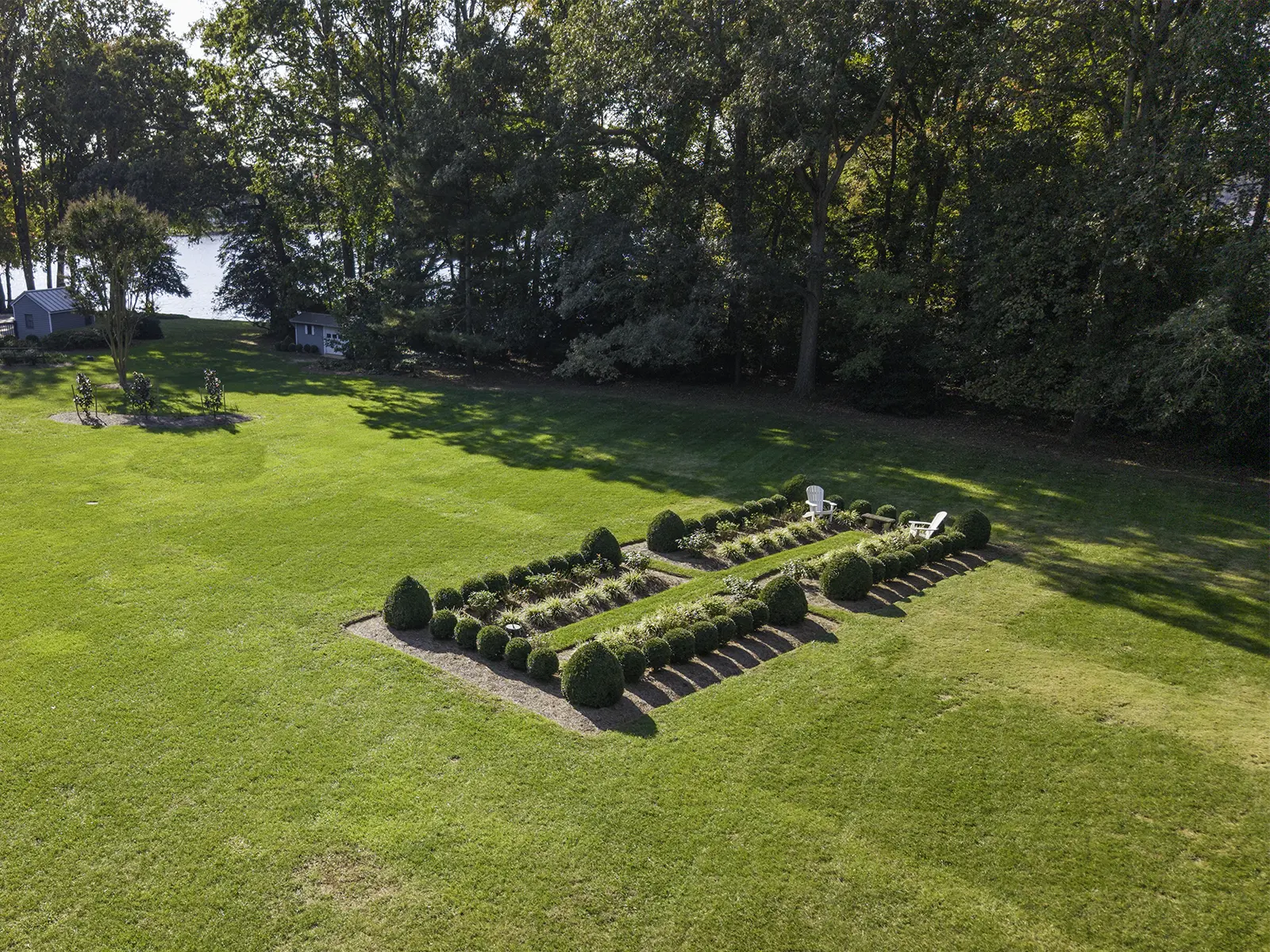
The bulbs bought in September belong in the ground now. Soil temperatures are where tulips, daffodils and alliums want them, and they can keep going in until the ground freezes, ideally by Thanksgiving. Plant at three times the bulb’s height, 6 to 8 inches for tulips, pointed end up. Daffodils and alliums are the choice where deer visit. Tulips are a buffet.
Give the turf its last feeding and its last mow.
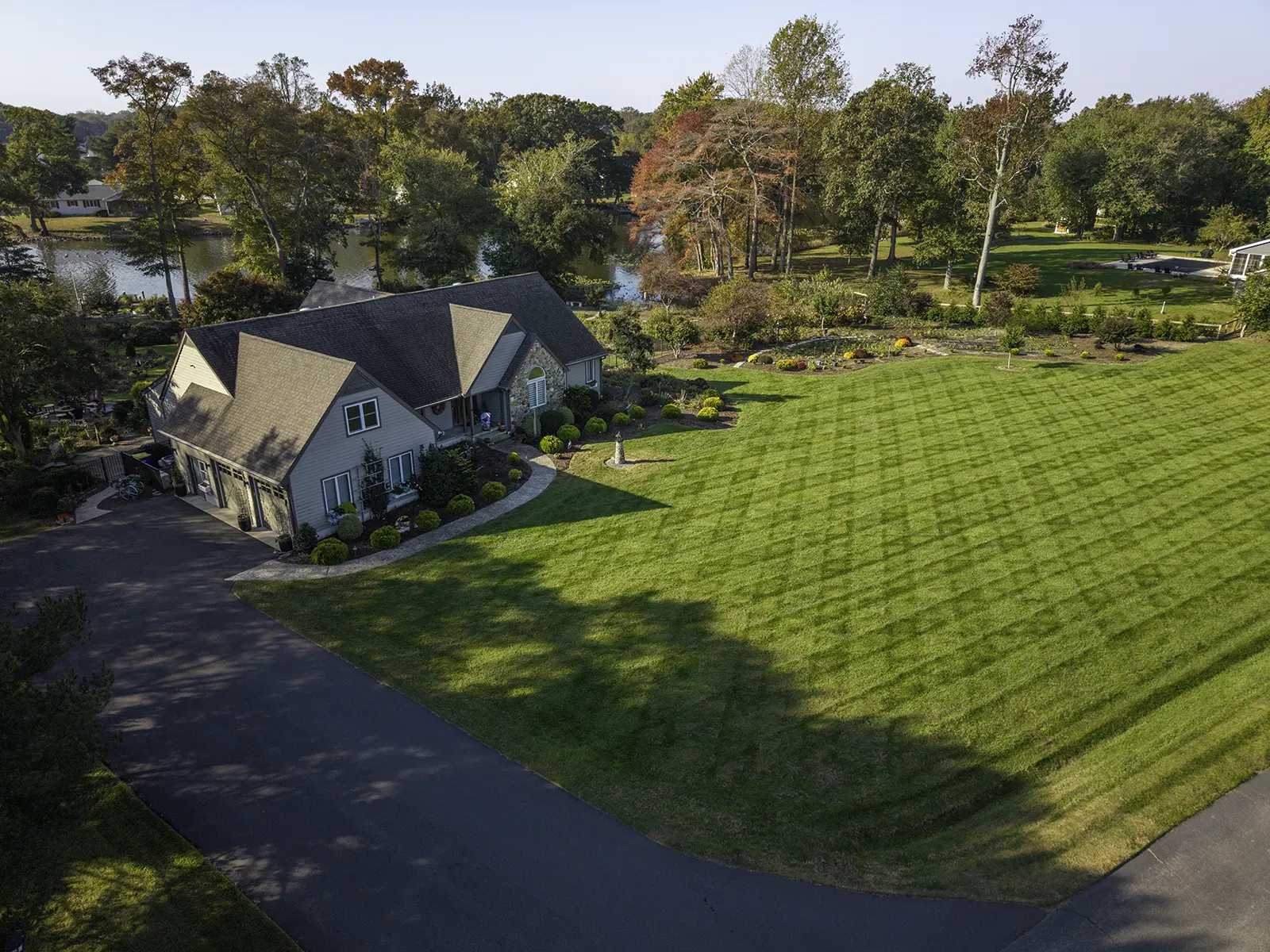
Cool season turf stops growing on top in November but keeps building roots underneath. A late fall feeding of about 1 pound of nitrogen per 1,000 square feet, applied after the last mow while the grass is still green, is the single best turf care application of the year for an early spring green up, whether the property sits in Chester County or down near the Delaware shore. Keep the final cut at about 3 inches for tall fescue. And don’t let the leaves sit. A matted layer through winter smothers the grass beneath it. A light cover can be mowed in place. Heavy layers, oak especially, should be raked off and shredded for the beds or the compost.
Mulch after the freeze, not before.
Winter mulch is there to keep the ground frozen, not to keep it warm. Spread it too early and voles and mice move in for the season. Wait until the top inch or two of soil has frozen, then lay 2 to 3 inches over perennial beds and around shrubs, pulled a few inches back from stems and trunks.
Then put the garden tools away properly.
Scrape the soil off shovels and spades and wire brush any rust. Sharpen pruners and loppers, then wipe every metal surface with a light coat of oil. Wooden handles get a rub of boiled linseed oil. Drain and coil the hoses, bring the terracotta pots inside before they crack and run small engines dry or add fuel stabilizer. Tools put away clean in November are ready the first warm day in March.
Plant of the month: Hamamelis virginiana, common witch hazel.
Just as the rest of the garden goes quiet, our native witch hazel comes into bloom. Its fragrant, spidery yellow flowers open in late October and November, often as the leaves turn the same gold and fall away, and they carry on into December. It is a large shrub or small tree, 15 to 20 feet tall and wide, native to the woodland edges of the Brandywine Valley and comfortable in sun or part shade. Give it moist, well drained soil and room to spread. Plant it where you walk past it on a cold afternoon. The fragrance is the reward.
November is a full month for the EHS professional gardening team. Watering evergreens, planting bulbs, the final turf care application and putting beds to rest all happen now, and all of it is done by EHS crews. If your property could use that attention before winter settles in, we’re glad to talk about yours.
Ann Waters is Head Horticulturist at Eastern Horticultural Services. She is a University of Delaware graduate and completed the two-year Professional Gardener Training Program at Longwood Gardens.

No responses yet