
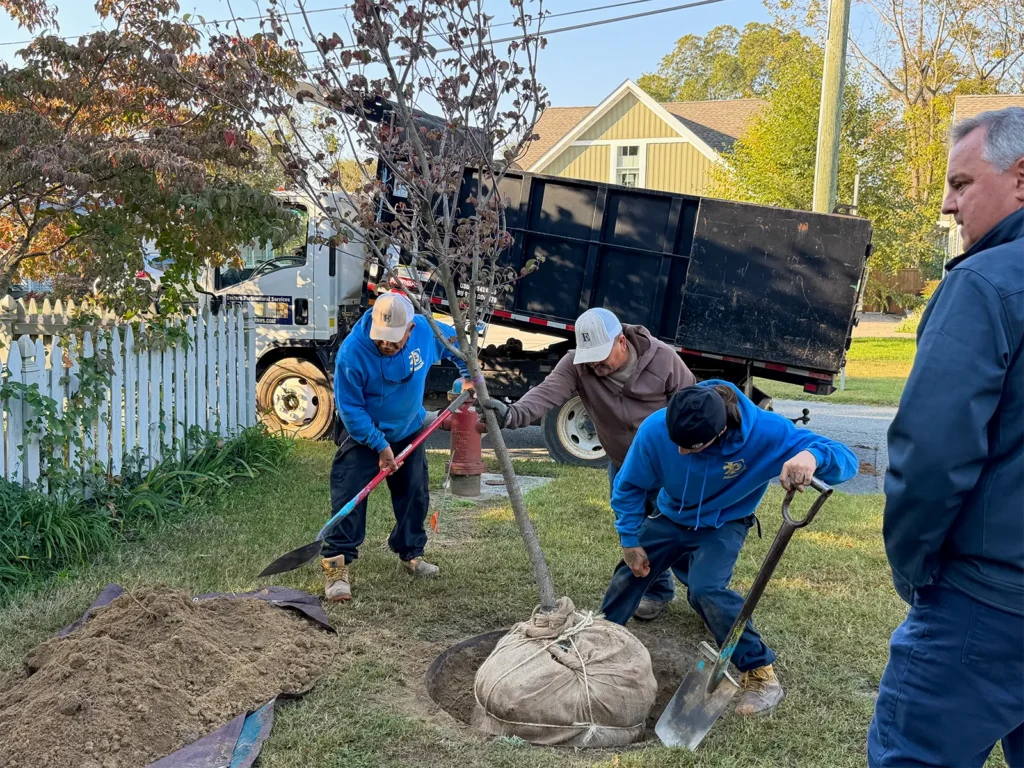
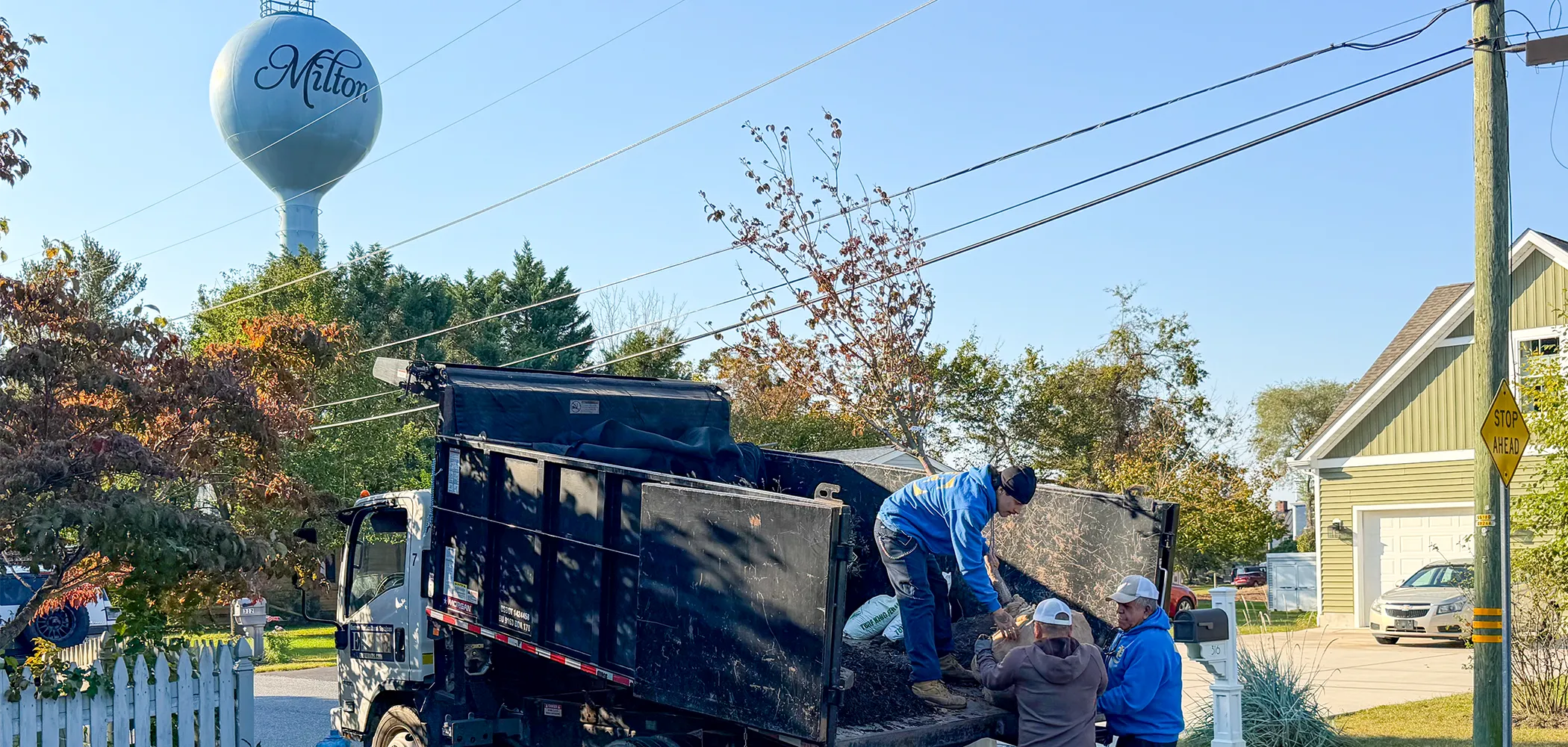
On a clear late-October morning, an EHS truck pulled to the curb in Milton, Delaware, with a balled-and-burlapped flowering dogwood, Cornus florida, in the bed. It was bound for a front yard with an open spot waiting for it. The crew set it with the root flare at grade, cut the burlap and twine back from the top of the ball and laid a ring of mulch two to three inches deep, pulled away from the trunk. It has been a dry fall, so the new tree got a thorough soaking before the crew moved on.
At the second stop, the work didn’t start with a shovel. John Winterbottom walked the full perimeter of the house with the homeowner, bed by bed: what was thriving, what had run its course, how tall each replacement would stand in three years and what it would take to keep it there. By the time they came back around to the front door, the decisions were made.
John says he has some version of that walk nearly every day. It’s the part of the job that never makes it into a photo, and it’s why the planting goes quickly once it starts. The choices were made by the person who has to live with the garden, with someone beside them who knows how each plant will behave.
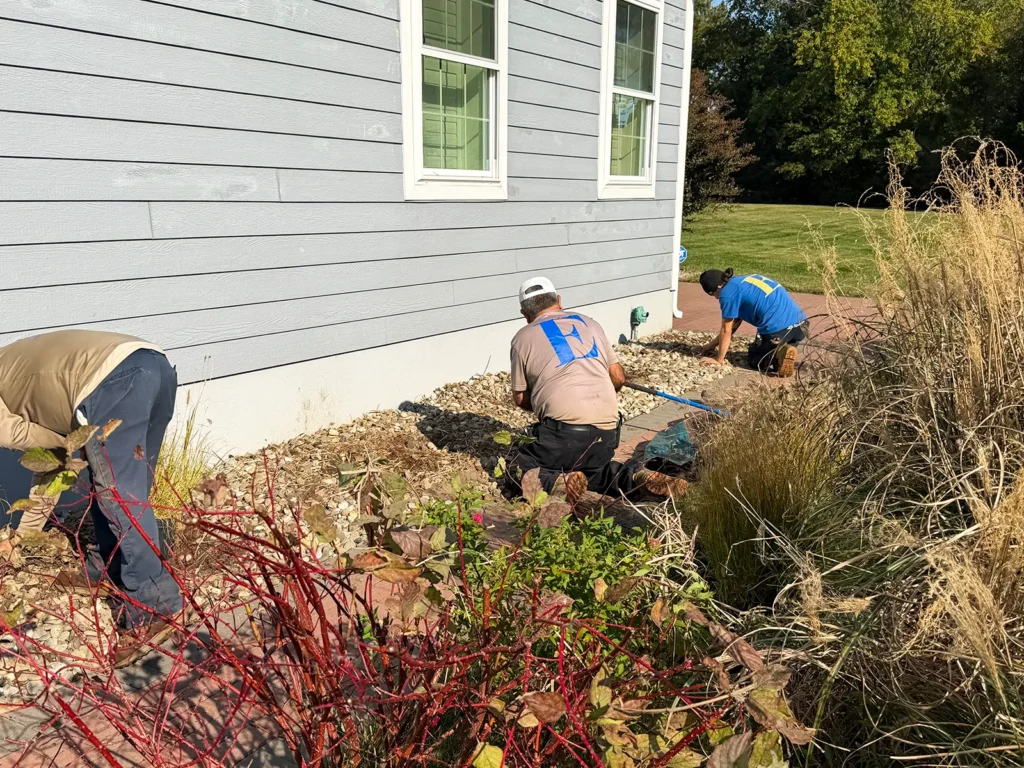
Then the crew went to work. The red-stemmed shrubs and spent grasses came out by the armful, the river stone was raked back and new ornamental grasses went in along the house with butterfly bush in purple and lavender. In that same neighborhood the EHS team cares for three properties, much of it turf care: feeding, weed control and seasonal applications.
Different ground, different care.
The soil in eastern Sussex County has little in common with the soil around the Brandywine. Up north, Piedmont loams hold water and nutrients well. On the coastal plain the ground is sand, low in organic matter, and water and fertilizer move through it quickly. That changes the work. Turf is fed lighter and more often, with slow-release nitrogen that stays in the root zone longer. Lime and nutrients follow a soil test. New plantings need water more often and for longer, compost worked into the beds helps the sand hold what it’s given, and plants are chosen for ground that dries out fast. The horticulture is the same in both places. How it’s applied is not.
Flowering dogwood, rooting through winter.
Fall planting gives a tree weeks of warm soil after the top has gone dormant, and the roots use every one of them. Expect the leaves to color and drop soon after planting; that is the season at work. In sandy ground, water a new tree deeply once a week until the ground freezes and again through any dry stretch next summer.
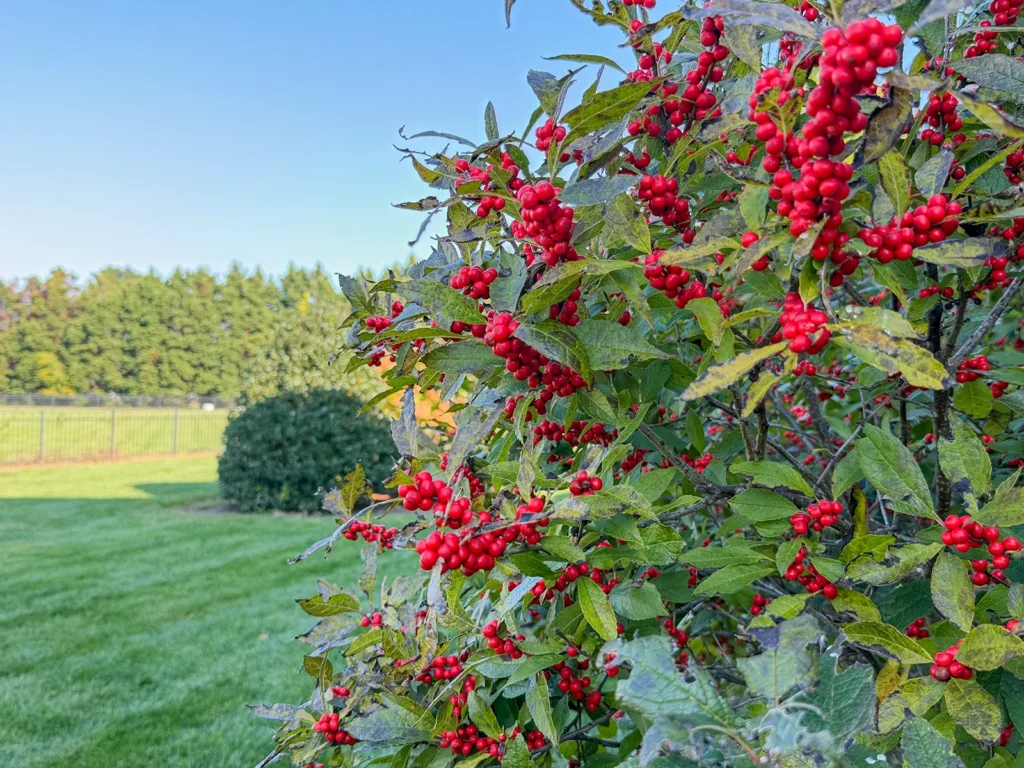
Winterberry holly, color into winter.
Among the shrubs the crew looks after at the second property, this one is at its peak right now. Ilex verticillata is a native deciduous holly, at home in the low, damp ground across Delmarva. Once its leaves fall, the stems stay loaded with red fruit into winter, until the birds take it. Only female plants bear berries, and each needs a male within about 50 feet to set them. A winterberry that flowers every June and never fruits is usually missing its partner.
EHS crews are in Lewes, Rehoboth, and Milton through the seasons for Sussex County turf care, tree planting and garden maintenance. John, one of EHS’s founding partners, has family roots in Sussex County, and the EHS team is glad to walk a property anywhere in the Brandywine Valley and across Delaware.

No responses yet