
The fall blooming perennials and the fall foliage are finally showing themselves, and the cooler nights are a reminder that the last two months of the growing season are here. October is when the garden starts to be put to bed, but it is still a good month to plant, and the work done now decides how well a garden comes through the winter. For landscape maintenance across Kennett Square and the Brandywine Valley, here’s where we’d put the effort this month.
Cut back what’s finished and leave what isn’t.
Peonies come first. Cut them to the ground and take the foliage out of the bed entirely. Peonies are prone to powdery mildew, the whitish powder you see on the leaves, and removing that debris in fall keeps the disease from carrying into next year. Any other perennial that has died back or gone ratty can be cut back now too. Leave the ornamental grasses standing for winter interest, along with the Rudbeckia, whose seed heads keep the songbirds coming. Once the beds are cleared, pull up the peony rings, trellises and other supports and store them for next season.
Trade the summer annuals for a pot that lasts all winter.
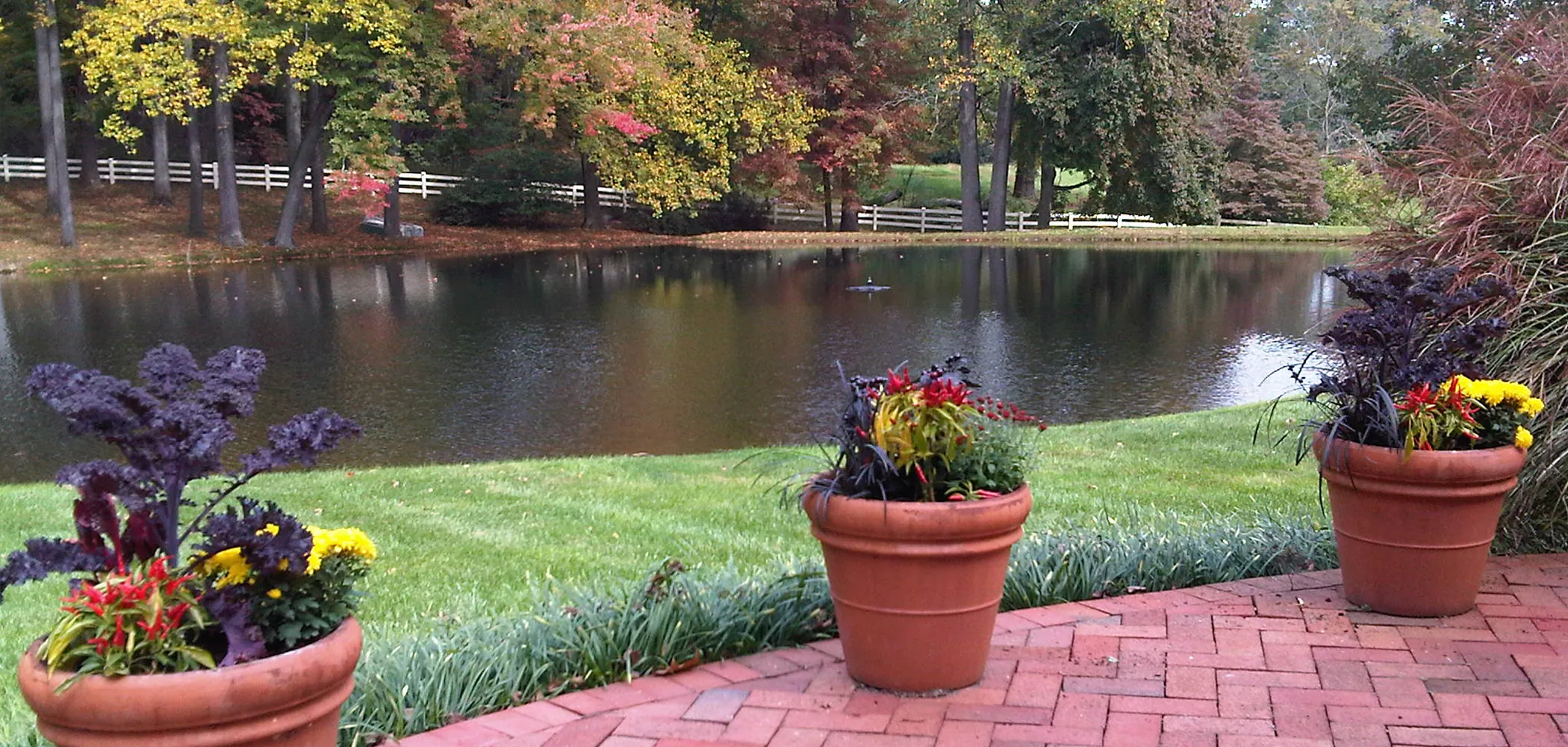
Summer annuals that are slowing down or looking tired can come out of the pots and the ground. In their place, plant one large container for the front door or the deck that will hold color through fall and winter. Choose a pot big enough for a small evergreen and deep enough to keep its roots protected, then fill in around it with cool season annuals and an evergreen perennial or two. Carex ‘Blue Zinger’ keeps its metallic blue foliage through the winter, edible kale holds its color well into the cold and Capsicum annuum ‘Black Pearl’, an ornamental pepper with glossy black foliage and fruit that ripens from black to red, makes quite a splash and is deer resistant. Planting now gives everything time to settle in. Keep it watered until the ground freezes. Wrapping the pot in burlap helps it through the winter, but if you don’t, it’s ok.
Bring the house plants in before the nights drop into the low 40s.
Most house plants don’t like temperatures in the low 40s and below, and here that usually arrives by mid to late October. Before anything comes inside, hose each plant down carefully to remove insects, take off any dead or dying leaves and pull the weeds growing in the pot. Fertilize one last time outside and let the plant dry thoroughly, then spray with an insecticidal soap, reading the label first since some plants don’t do well with sprays. Once that dries, it’s ready to come in. Set a saucer under every pot so water doesn’t run onto the carpet or the table, and place each plant where the light suits it. With young children or pets in the house, check whether a plant is poisonous before deciding where it goes.
Keep planting, and protect the young trees.
Perennials, shrubs and trees can still go in this month, as long as they’re watered when the rain doesn’t come. New plantings need all the water they can get to establish before winter, so keep at it until it’s too cold to do so. Bucks are rubbing their antlers now, and young trees take the worst of it. If they aren’t protected yet, wrap them with burlap or a length of corrugated pipe and leave it in place until January.
Plant of the month: Acer griseum, the paperbark maple.
We return to this tree in October for good reason. It grows only 20 to 30 feet tall and 15 to 25 feet wide, so it suits even a smaller garden, and its green foliage turns orange to red in fall. The real show is the bark, cinnamon to reddish and peeling in curls, at its best in winter. Unlike most peeling bark, it stays on the tree instead of making a mess on the ground, and every tree peels a little differently. Give it full sun to dappled shade and well drained soil. Like a lot of good plants, it doesn’t like wet feet.
October is a busy month for the EHS professional gardening team. Cutting back, clearing beds, planting winter containers and setting new plantings up for the cold all happen now, all of it done by EHS crews. If your garden could use that attention before the frost, we’re glad to talk about it.
Ann Waters is Head Horticulturist at Eastern Horticultural Services. She is a University of Delaware graduate and completed the two-year Professional Gardener Training Program at Longwood Gardens.

No responses yet