
What a week for a garden. Several days in the high 90s with barely a drop of rain, and now the forecast turns around and delivers two days of downpours. Gardens across the Brandywine Valley are getting both extremes at once, and each one asks something different of us.
Stretches like this separate thriving gardens from surviving ones, and the difference almost never comes down to effort. It comes down to water, and to knowing what actually got it.
Don’t let the storm do your thinking. Here is the part that surprises people: a hard rain on drought-baked soil is not the same as a deep watering. Dry soil crusts and compacts, and a downpour tends to shed off the surface and run for the storm drain before much of it soaks in. After the rain passes, dig down three or four inches in a bed. If it’s dry below the first inch, the drought never ended for your plants, whatever the rain gauge says. Slow, gentle water still needs to finish the job.
Triage before technique. When heat stress stacks up, not everything in the landscape is equally at risk. Anything planted this spring goes to the front of the line. Those root systems haven’t reached down yet and they cannot ride this out on their own. Containers come next. Established beds and mature shrubs can wait their turn. A tree that’s been in the ground five years has resources a May planting simply doesn’t.
Water deeply, not often. A light daily sprinkle trains roots to live in the top inch of soil, which is exactly where the heat does its damage. A long, slow soak once or twice a week sends roots down where the moisture holds. Morning is the right time. Watering at the base, not over the foliage, keeps fungal problems from getting a foothold in our humid summers.
Mulch is doing more than you think. Two to three inches of shredded hardwood mulch can lower soil temperature and cut evaporation dramatically. If beds were mulched in April, July is when to check for thin spots. Just keep it pulled back from trunks and stems. Mulch piled against bark invites the very problems it’s meant to prevent.
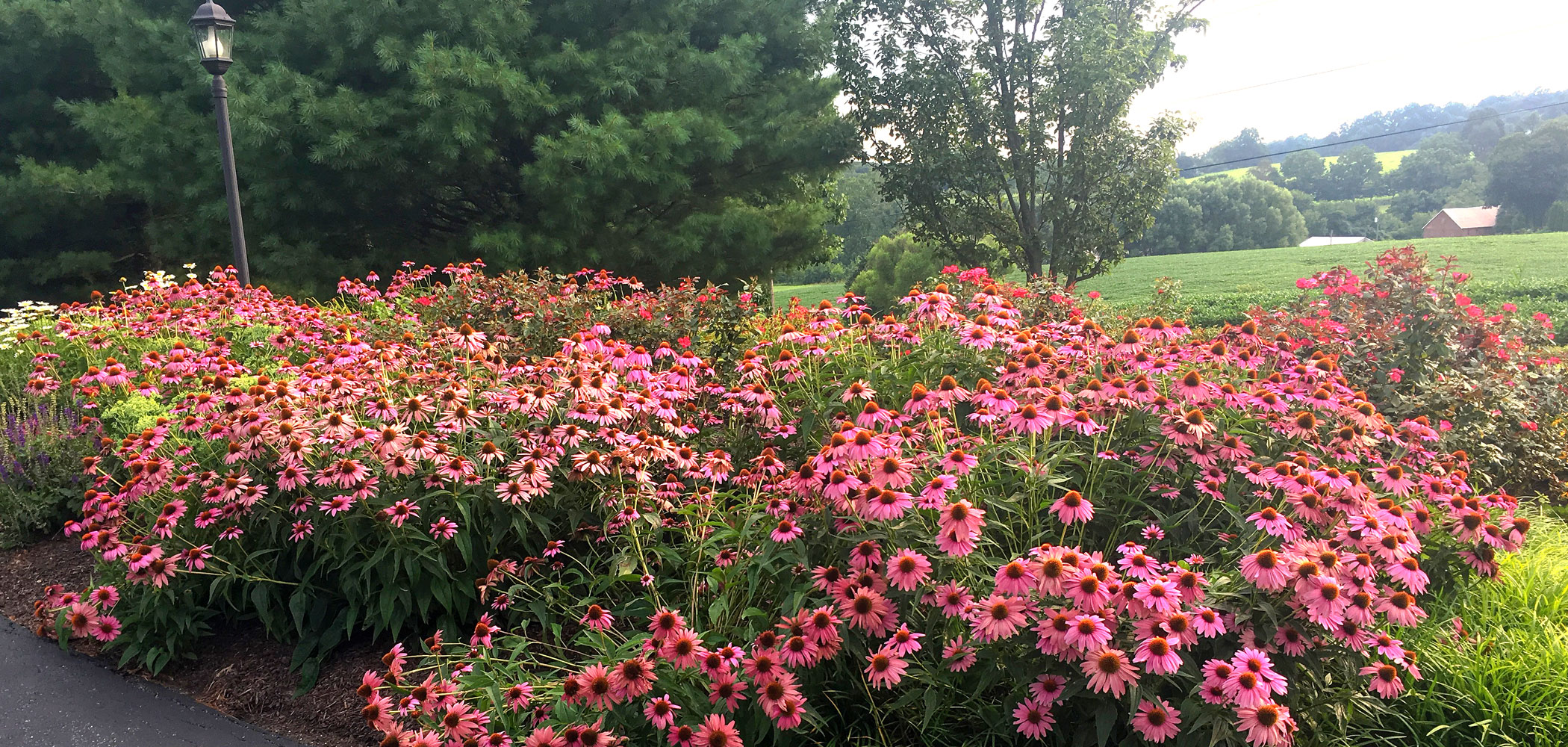
Cut back for a second act. Catmint, Salvia and hardy geraniums that bloomed in June can be sheared back now for a fresh flush in late summer. Echinacea and Rudbeckia are carrying the garden through the heat, and deadheading keeps them at it. Leave a few coneflower seed heads standing if you like goldfinches. They certainly do.
Read the wilt correctly. Hydrangeas and other big-leaved plants will flag dramatically on a 95-degree afternoon, and the instinct is to run for the hose. Hold on. Afternoon wilt in extreme heat is often just the plant conserving itself, and it will recover by morning. The plant to worry about is the one still wilted at 7 a.m. That one is genuinely dry. Watering by the clock of the plant, not the drama of the afternoon, saves a lot of overwatering.
Mind the Japanese beetles. They arrive in July with an appetite for roses, hibiscus and lindens. On a residential scale, knocking them into a bucket of soapy water in the early morning is genuinely effective. Skip the pheromone traps. They tend to invite more beetles to the party than they remove.
And then, honestly, enjoy it. July is the month the garden gives back everything the spring asked of it. If keeping it vibrant through the heat has become a bigger job than you want, a dedicated EHS gardening team can carry the summer for you. Begin a conversation and we’ll take a look.
Ann Waters is Head Horticulturist at Eastern Horticultural Services. She is a University of Delaware graduate and completed the two-year Professional Gardener Training Program at Longwood Gardens.

No responses yet